
Could Your Dog's Diet Be Behind Their Anxiety?
If your dog is anxious, reactive, or just seems "wired" a lot of the time, there's a good chance you've been told it's a training issue. Sometimes it is. But one of the most overlooked pieces of the puzzle is what's actually going on in your dog's gut.
There's been a genuine run of new research on the gut-behaviour link in dogs over the past year or two, so this post pulls that evidence together in one place, along with what you can actually do about it.
What the Research Shows About Dog Diet and Anxiety
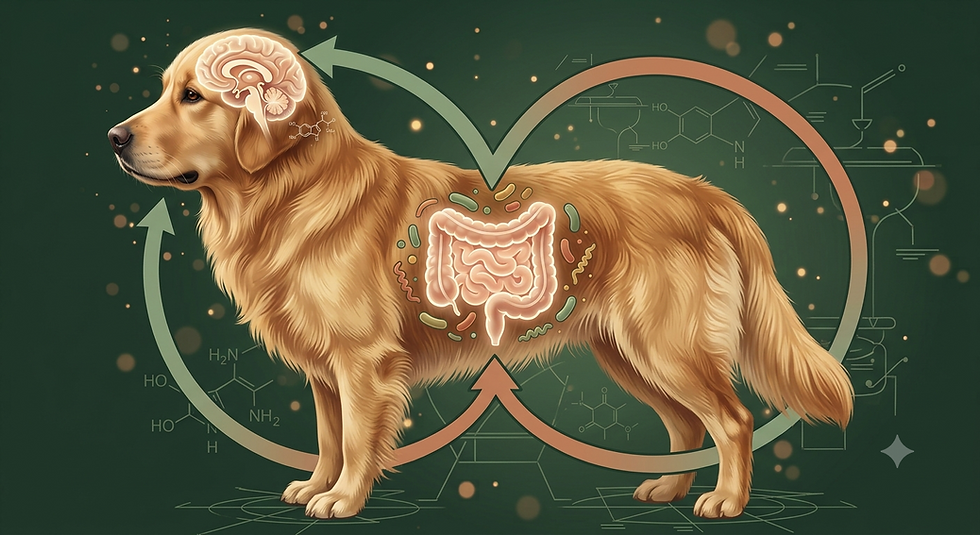
Over 90% of your dog's serotonin, the neurotransmitter involved in calm and mood regulation, is made in the gut. Not the brain. The gut.
Those gut cells talk to the brain constantly through the vagus nerve, a direct line running from the belly to the brainstem. When the gut is out of balance, that conversation gets noisy, and one of the things that can show up on the other end is anxiety, reactivity, or aggression.
This isn't a fringe theory anymore. A 2025 study in Scientific Reports found a real link between gut microbiome makeup and anxiety and aggression scores in pet dogs. A separate review the same year confirmed the same pattern, while being upfront that we're still working out the exact mechanisms. In working dogs specifically, researchers found that more aggressive dogs consistently had lower serotonin levels, tying the behaviour straight back to gut function.
What Gut Imbalance Can Look Like in Dogs
It's not always obvious. Keep an eye out for:
Loose stools, or stools that change from day to day
Itchy skin, ear issues, or a dog who's always scratching
Bad breath that isn't just "dog breath"
Restlessness, pacing, or a dog who struggles to settle
Over-reactivity to normal, everyday stuff
If your dog is anxious AND showing any of these, the gut is worth a proper look before you assume it's purely behavioural.
The Gut-Brain Axis, Explained Properly
"Gut-brain axis" gets thrown around a lot, so here's what it actually means for your dog.
Your dog's gut and brain are in constant two-way contact, and that conversation runs through four main channels:
Neural — the vagus nerve runs directly from the gut to the brainstem, carrying signals both ways. It's the fastest route, and it's how a gut in distress can trigger a stress response almost instantly.
Metabolic — gut bacteria produce compounds your dog's brain relies on, including serotonin and GABA (the brain's main "calm down" neurotransmitter). A specific gut bacteria genus, Blautia, has shown up repeatedly in research on anxious dogs, a good example of just how specific this link can get.
Endocrine — an unhappy gut can push cortisol (the stress hormone) up, and chronically elevated cortisol keeps a dog stuck in a reactive, on-edge state.
Immune — a large portion of the immune system lives in the gut. When that system is inflamed or out of balance, it releases signalling molecules that can affect brain function and mood.
Put simply, a dog's emotional state isn't just "in their head." It's being shaped, hour by hour, by what's happening in their gut. That's why dogs with genuine dysbiosis (gut imbalance) so often present as anxious, reactive, or unable to settle, even when nothing in their environment or training has changed.
This is also why a single "calming" supplement often falls flat on its own. If the underlying gut environment is still out of balance, you're managing symptoms rather than addressing what's actually driving them.
What the Research Shows Actually Helps
Two things stood out from recent trials:
A placebo-controlled crossover study gave anxious Labradors a specific probiotic strain for six weeks. 83% had lower stress hormones and 75% had lower heart rates in response to things that normally set them off.
A peer-reviewed trial found that dogs fed a diet with added fish oil showed measurable shifts in their gut bacteria, along with lower levels of a blood metabolite linked to anxiety.
That's a real, testable diet and gut connection, not just a feeling.
Why Omega-3s Matter for the Gut Specifically
Omega-3 fatty acids (the kind found in fish oil and green-lipped mussel) do a few useful jobs in the gut:
They help calm gut inflammation, which is often at the root of a "leaky" or irritated gut lining
They support a more diverse, balanced population of gut bacteria
That knock-on effect on the microbiome is exactly what showed up in the study above, where fish oil supplementation shifted gut bacteria and lowered an anxiety-linked metabolite in the blood
In other words, omega-3s aren't just a "good for the coat" add-on. They're doing real work on the gut environment that feeds back into mood and behaviour.
What to Try This Week
You don't need to overhaul everything overnight. Start here:
Swap out at least one ultra-processed treat or filler for something fresh
Add a proper probiotic to support gut bacteria diversity. This is why I recommend Gut Protect alongside Gut Restore. I like this pairing especially; it's a genuinely solid gut reset that I think every dog would benefit from running at least once a year, anxious or not
If your dog isn't already getting a quality omega-3, Green-Lipped Mussel Oil is a good place to start, it's the same nutrient class that showed up in the fish oil trials
Give it four to six weeks before judging results. That's the window most of these studies used before seeing real change, and gut healing isn't an overnight process.
This Isn't Training Versus Nutrition
It's often both. A dog with a genuinely unsettled gut is going to struggle to respond to training the way a comfortable, well-fed dog will. Support the gut, and a lot of the training work you're already doing gets easier to land.
If your dog's anxiety, reactivity, or general "can't settle" energy has you wondering whether food is part of the picture, get in touch or book in for a dietary history consult. I'd love to help you get to the bottom of it.
This content is general guidance and not a substitute for veterinary care. If your dog's anxiety is severe or sudden, please check in with your vet first.


Comments